culture
Chinese food for Mandarin learners: regions, dishes and how to order
Steam hits first, then chilli oil, then the clack of chopsticks on shared plates. Chinese meals put the food in the middle and leave you a personal bowl. Learn how the table works, spot famous dishes in photos, read the characters on menus, and order without freezing.
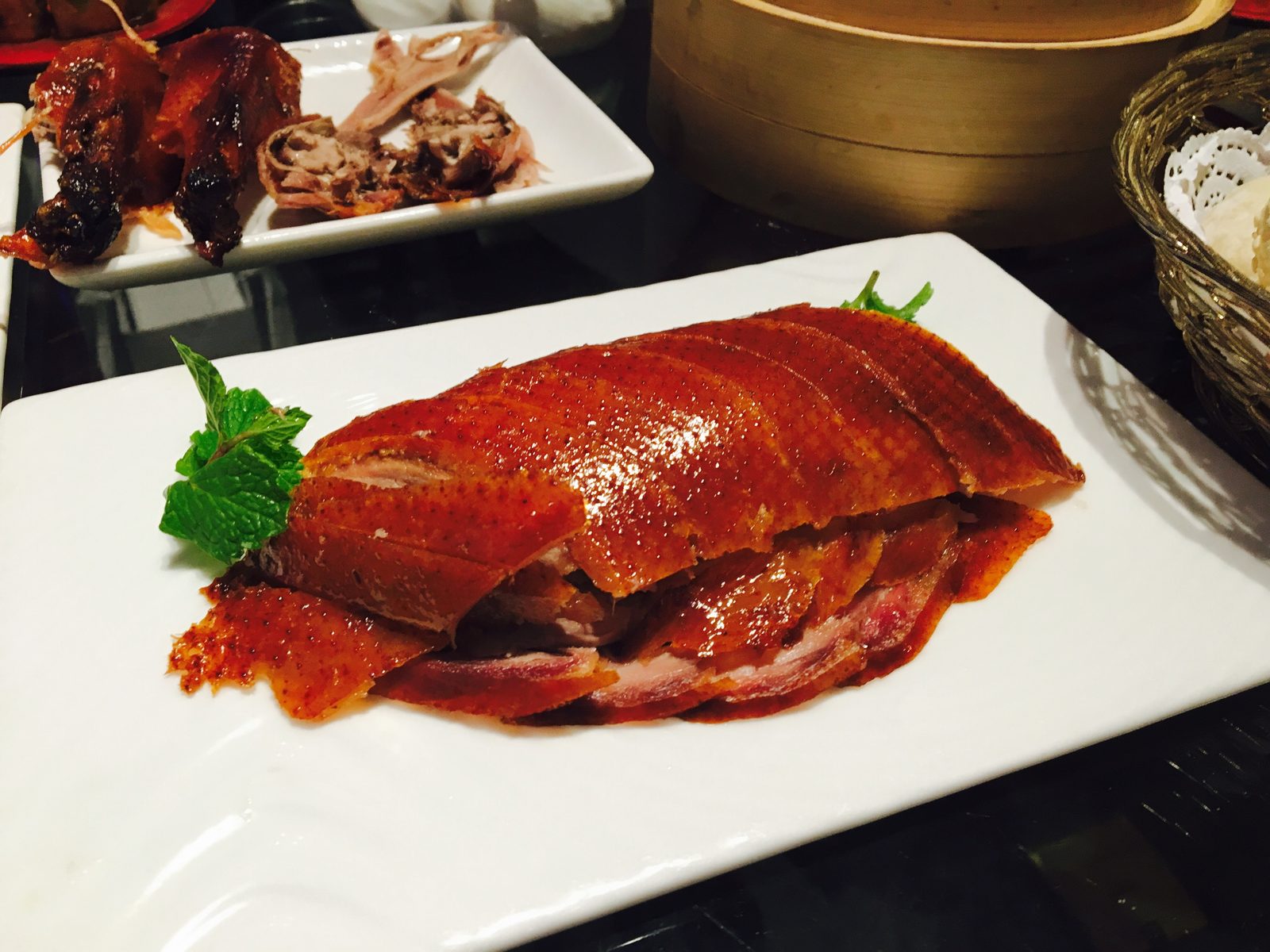
How a Chinese meal works
Lids come off and the smell of broth fills the room. At a sit-down meal you share 菜 (cài, dishes) from the middle of the table and keep your own bowl of 米饭 (mǐfàn, rice) or noodles. Reach for the shared plates with chopsticks, or a serving spoon when one is offered. One host often pays as 请客 (qǐngkè, to treat); friends may split as AA制 (AA zhì).
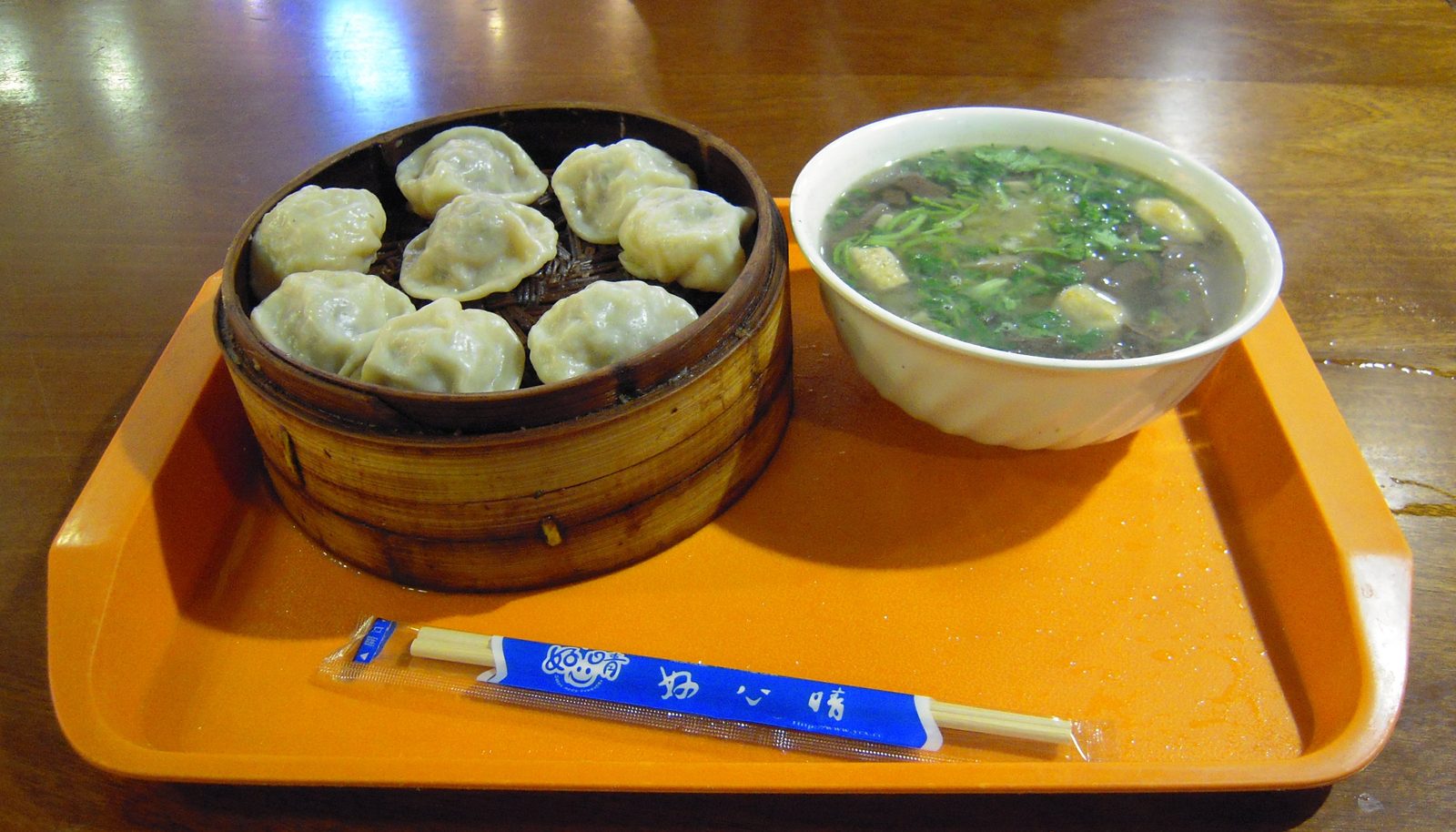
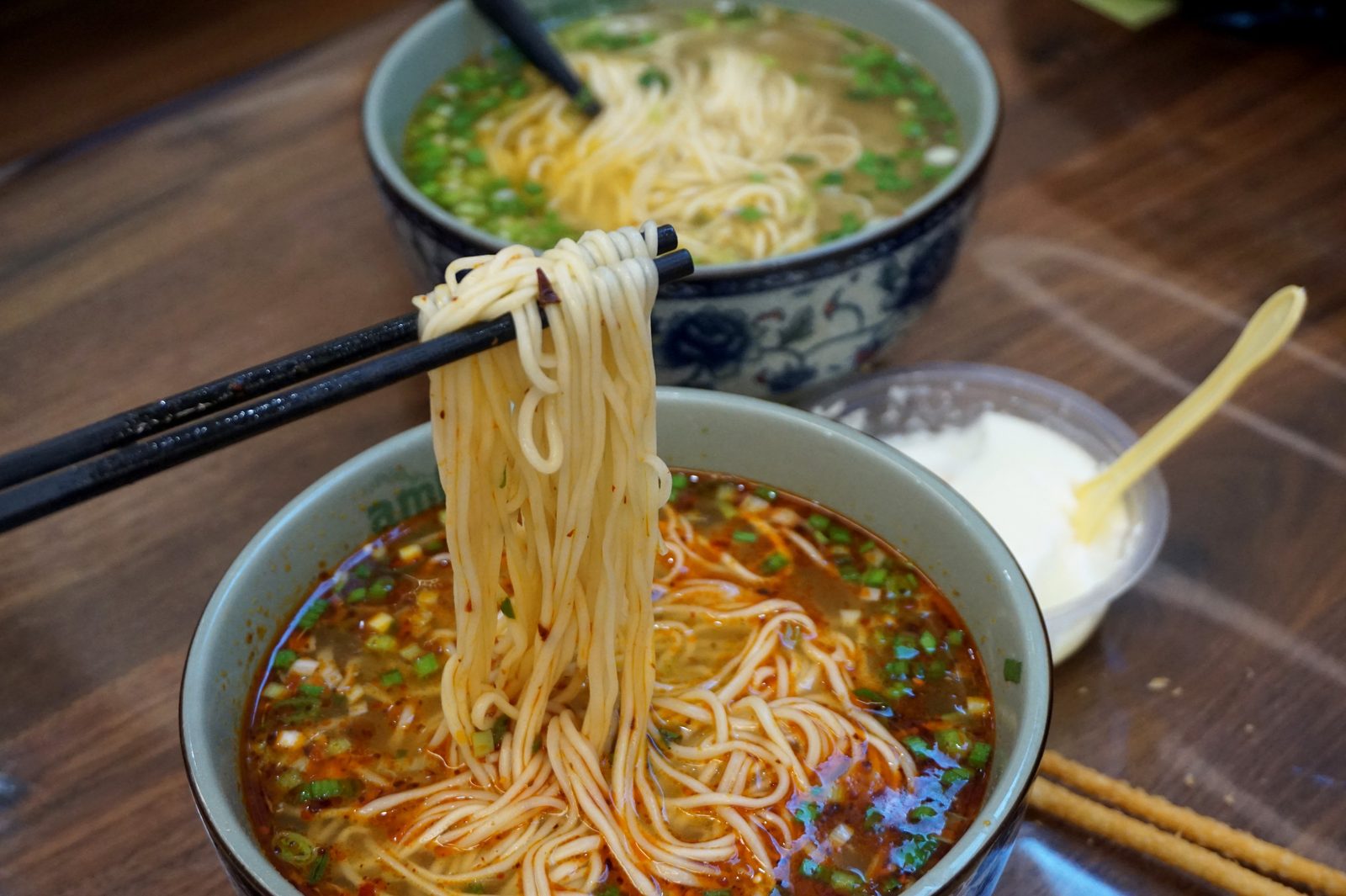
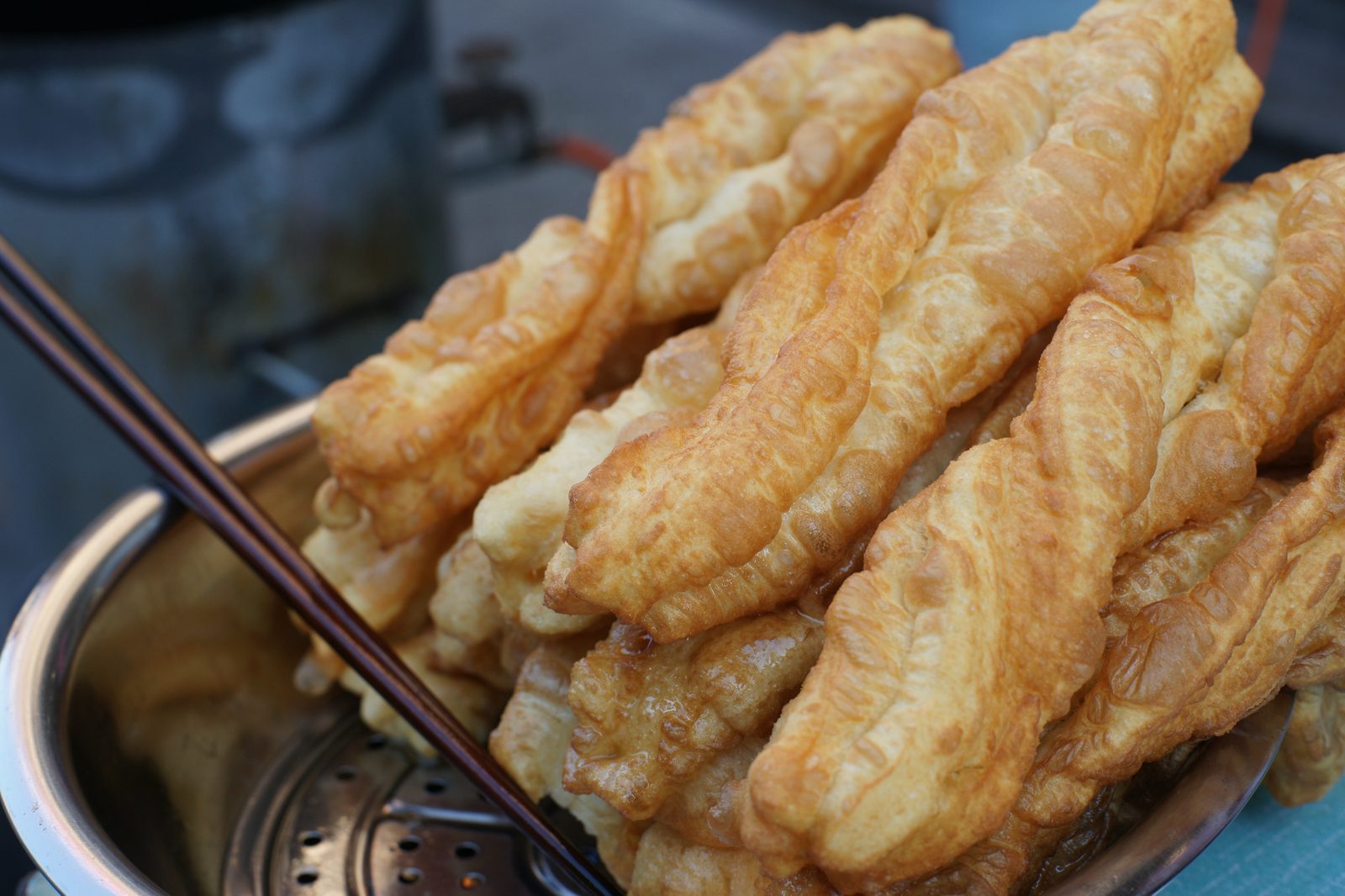
Street and shop food is one person, one bowl. Think 兰州拉面 (Lánzhōu lāmiàn), 包子 (bāozi), or 油条 (yóutiáo) dunked in 豆浆 (dòujiāng). Banquets add courses, toasting and formal seats - shared dishes stay at the core.
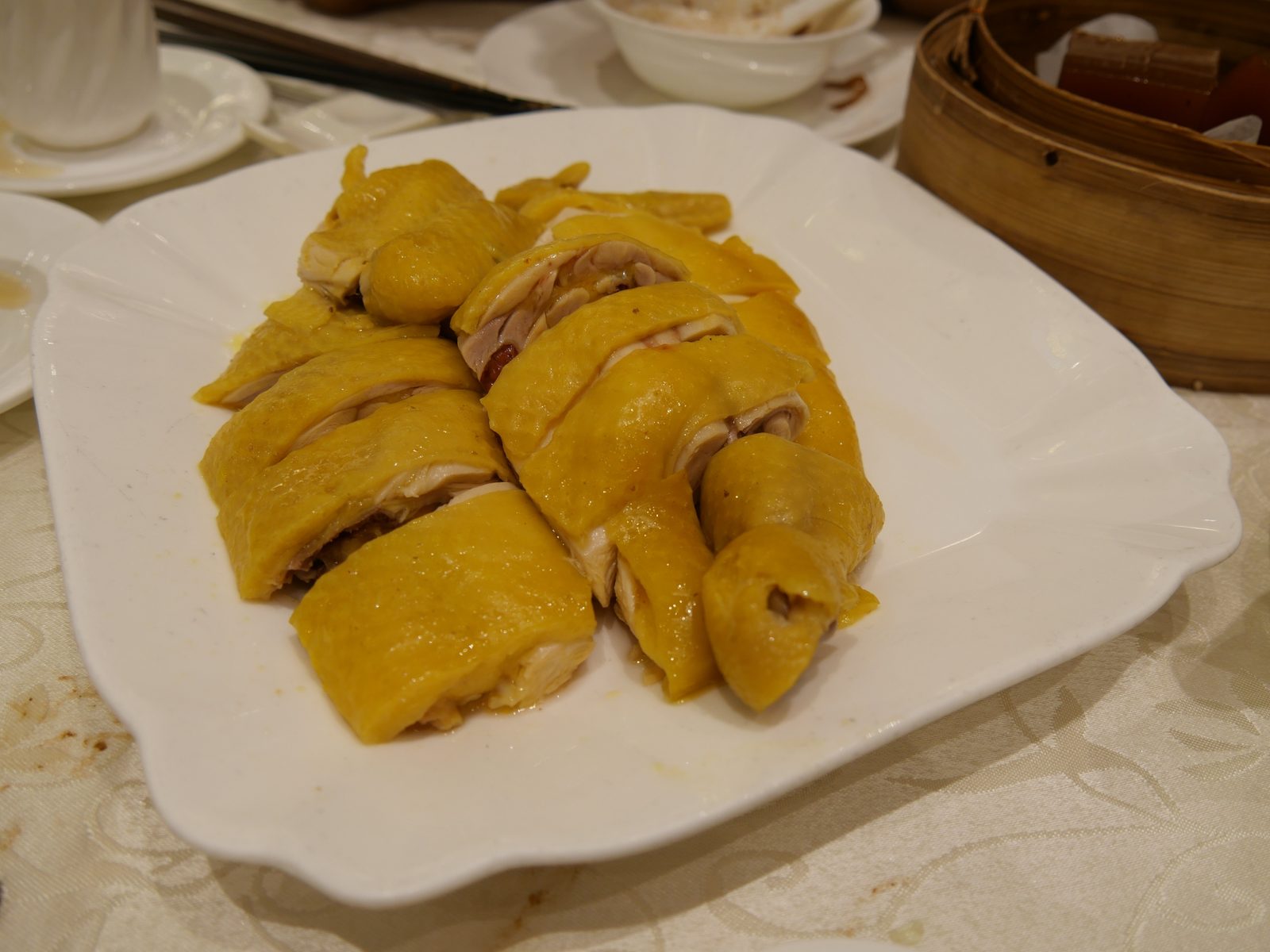
Regions and flavour
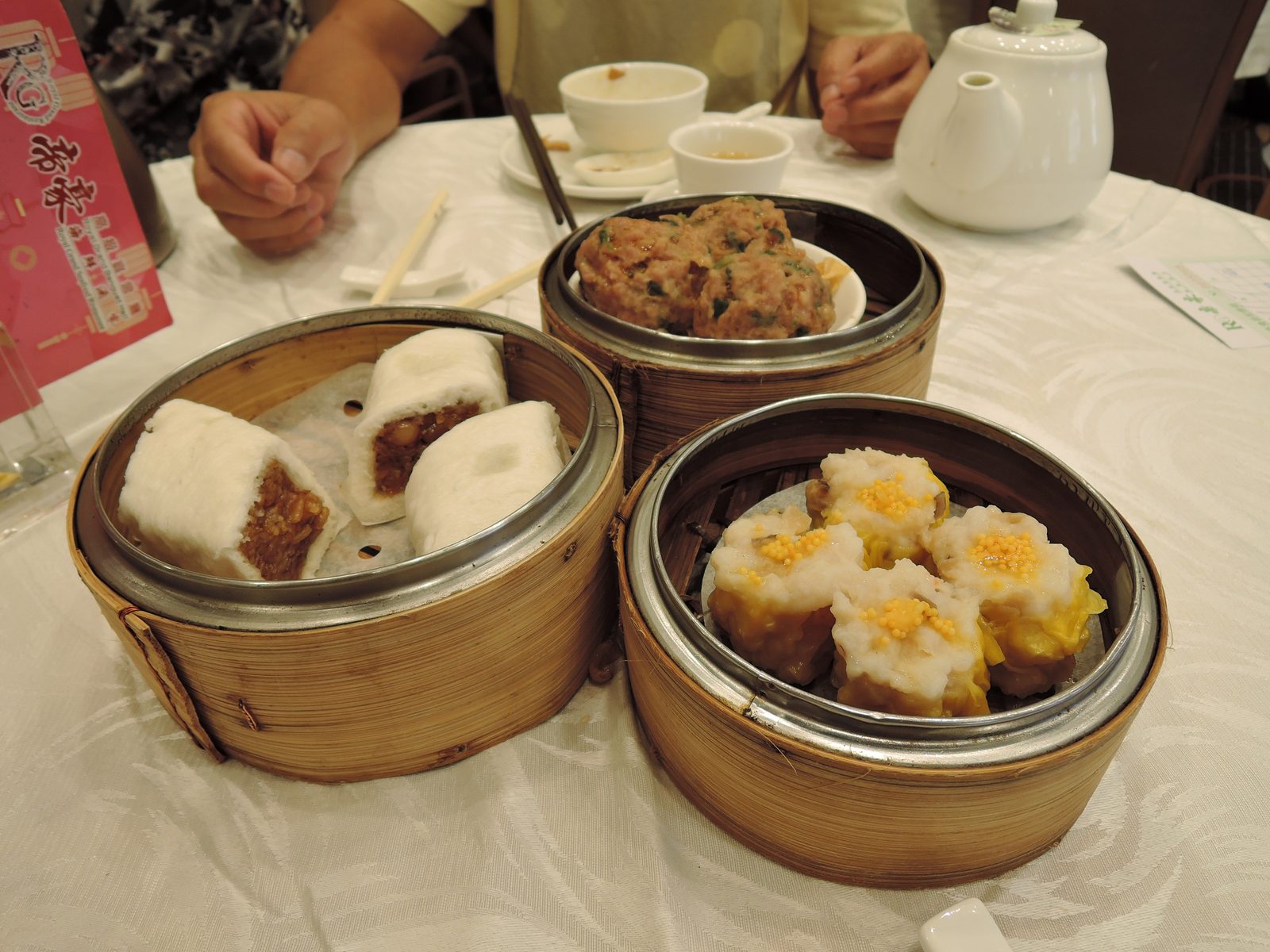
Cookbooks list 八大菜系 (bā dà càixì, the eight great cuisines). On the road you can start smaller: 川菜 (Chuāncài) for chilli and 麻 (má, numbing), 粤菜 (Yuècài) for mild seafood and 点心 (diǎnxīn), 鲁菜 (Lǔcài) and northern wheat foods, 淮扬菜 (Huáiyáng cài) for refined Jiangnan flavours, plus loud local scenes such as 湘菜 (Xiāngcài) and Xinjiang roast meats.
Sichuan 麻辣 (málà) pairs chilli heat with Sichuan peppercorn numbness - your lips tingle before the burn settles. Cantonese kitchens often keep sauces light so the ingredient stays clear. Ask for 微辣 (wēilà, mild) or 不辣 (bù là, no chilli) when your bowl needs mercy.
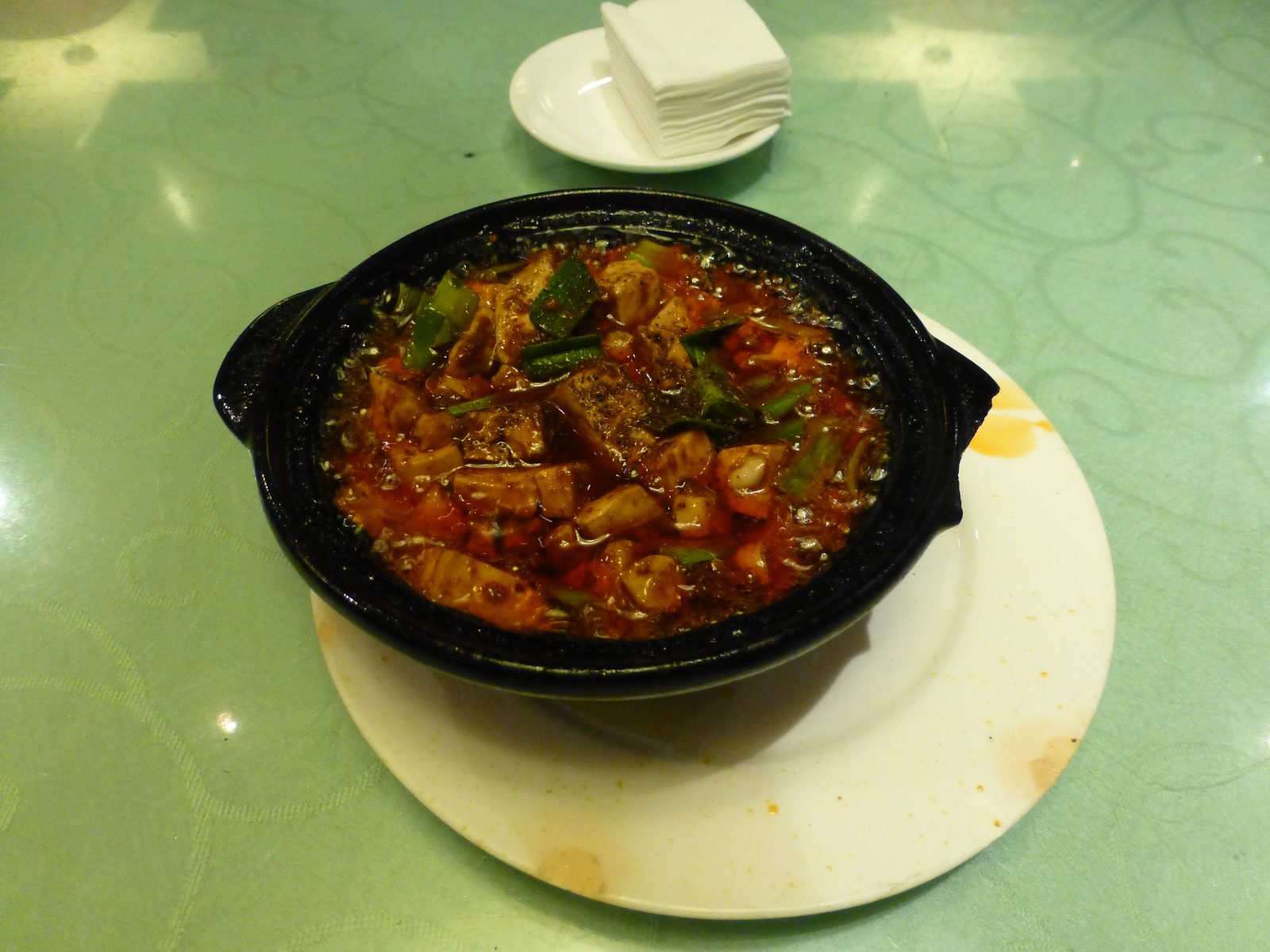
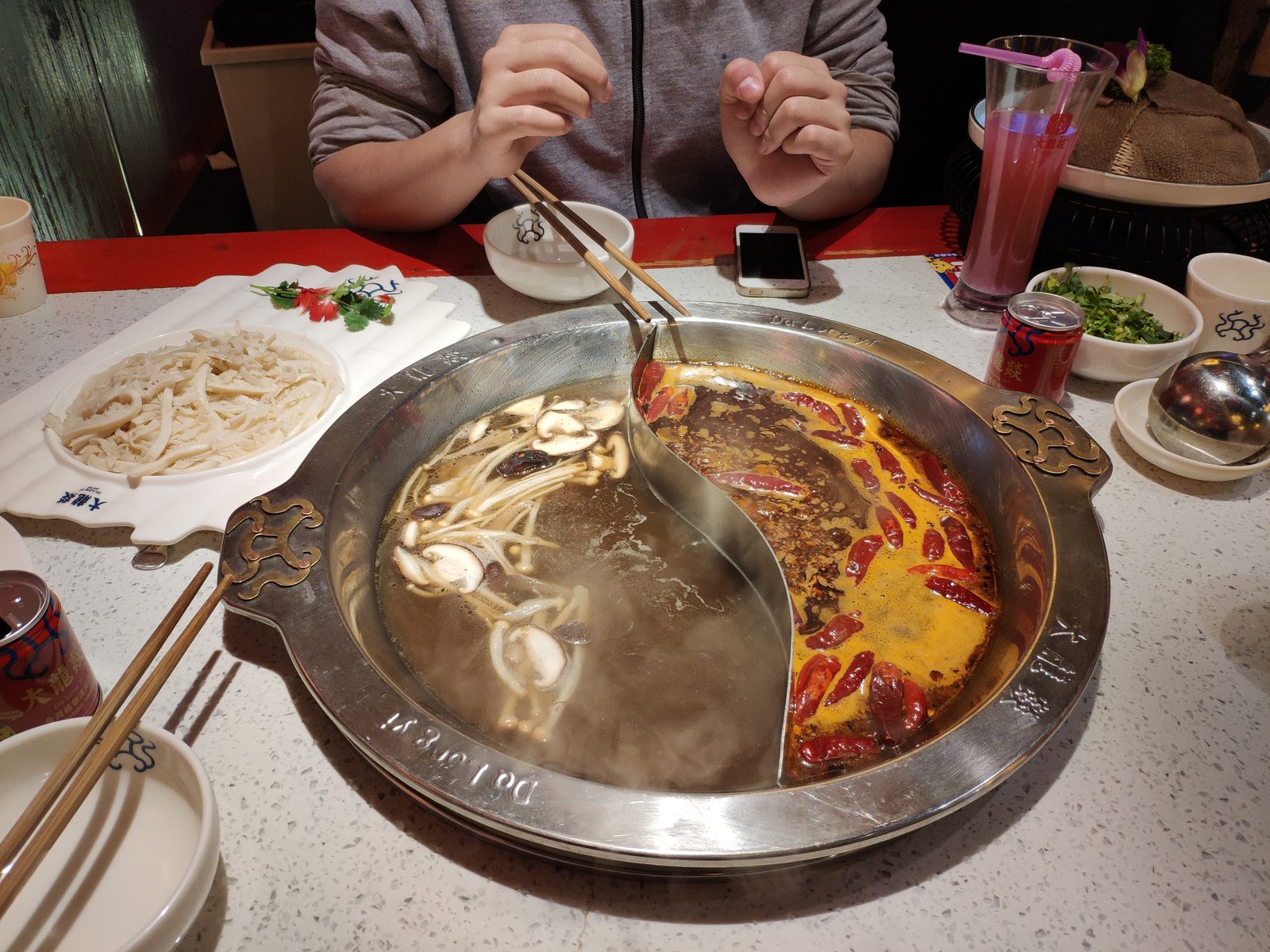
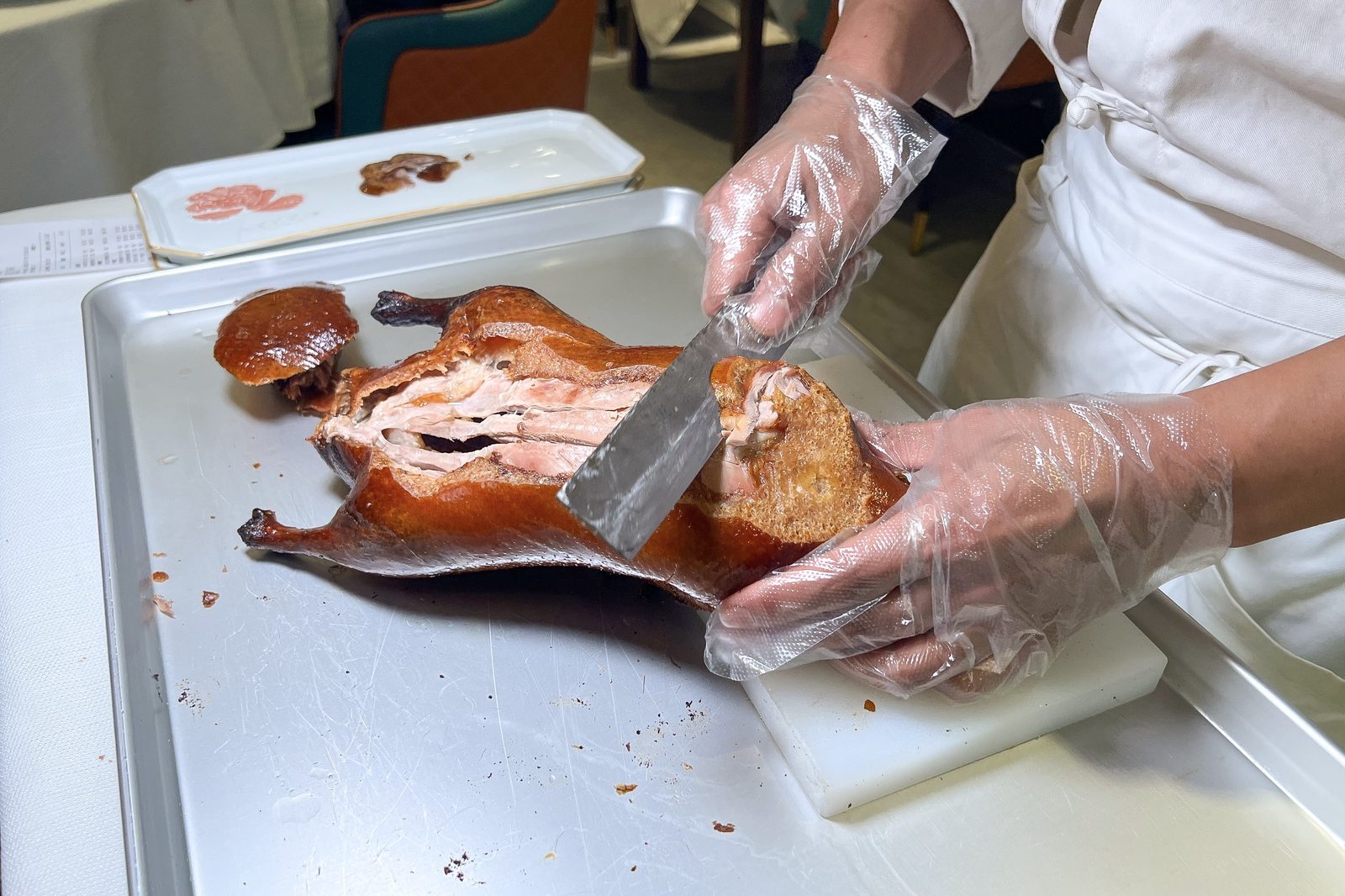
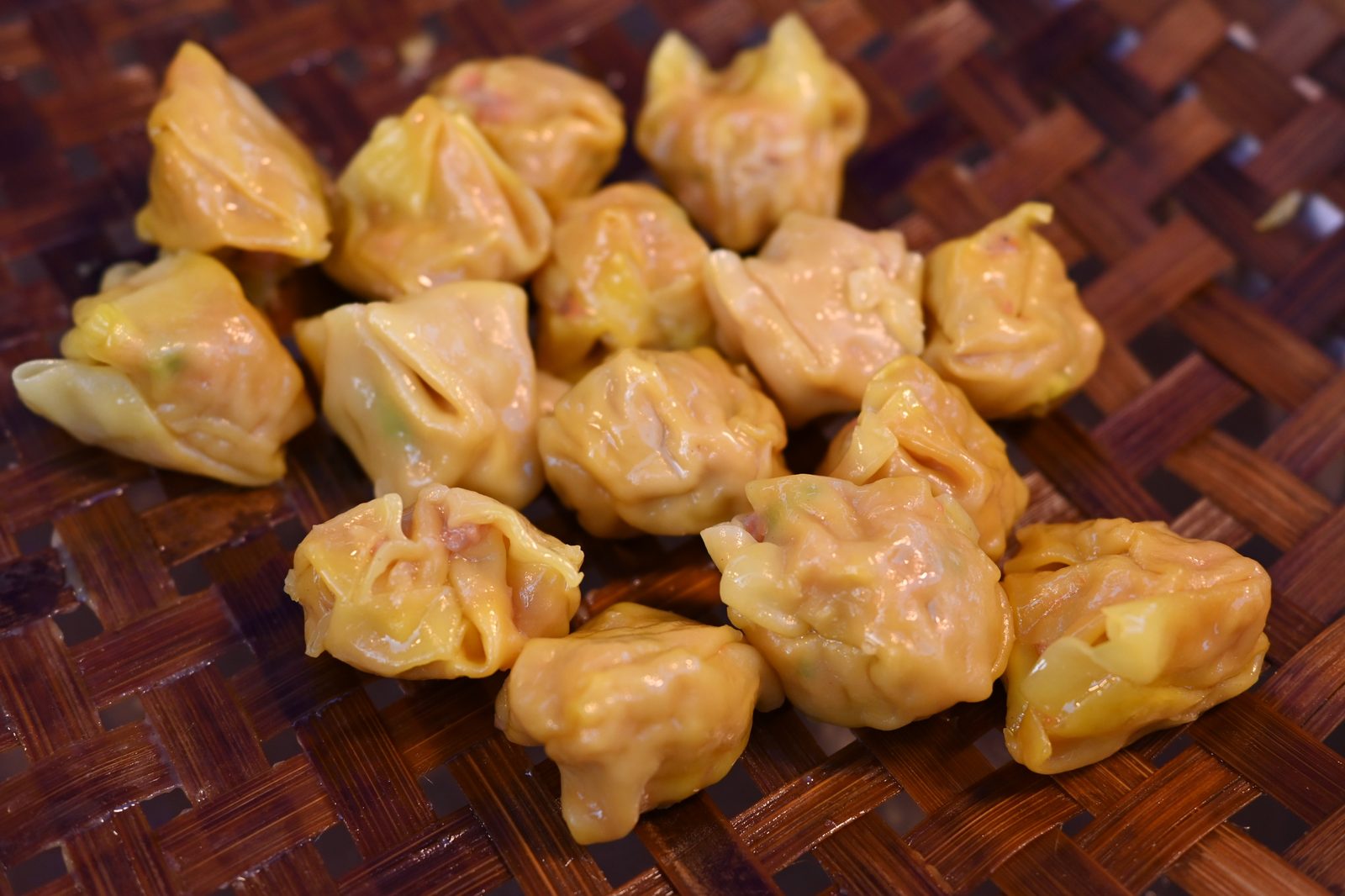
Dishes to recognise
These names turn up on tourist menus and in neighbourhood shops. Learn the characters so the plate and the word click together.
Words to know
These show up before the food does. Look each character up and practise the strokes on HanziBook.
- 菜 cài - dish; cuisine; vegetable (context) - can be studied in HanziBook Study →
- 菜单 càidān - menu - can be studied in HanziBook Study →
- 点菜 diǎn cài - to order dishes - can be studied in HanziBook Study →
- 米饭 mǐfàn - cooked rice - can be studied in HanziBook Study →
- 面条 miàntiáo - noodles - can be studied in HanziBook Study →
- 饺子 jiǎozi - boiled dumplings - can be studied in HanziBook Study →
- 包子 bāozi - steamed stuffed buns - can be studied in HanziBook Study →
- 火锅 huǒguō - hot pot - can be studied in HanziBook Study →
- 麻辣 málà - numbing-spicy (Sichuan) - can be studied in HanziBook Study →
- 微辣 wēilà - mild spicy
- 不辣 bù là - no chilli / not spicy - can be studied in HanziBook Study →
- 清淡 qīngdàn - light / mild flavour - can be studied in HanziBook Study →
- 外卖 wàimài - takeaway / delivery - can be studied in HanziBook Study →
- 打包 dǎbāo - pack leftovers to go - can be studied in HanziBook Study →
- 买单 mǎidān - ask for the bill
- 请客 qǐngkè - to treat / host the meal - can be studied in HanziBook Study →
- 筷子 kuàizi - chopsticks - can be studied in HanziBook Study →
- 服务员 fúwùyuán - waiter / server - can be studied in HanziBook Study →
- 好吃 hǎochī - delicious - can be studied in HanziBook Study →
- 推荐 tuījiàn - to recommend - can be studied in HanziBook Study →
How to order
Catch the eye of 服务员 (fúwùyuán) or raise a hand. Point at the menu photo if tones fail you. Say allergy or religion limits early: 我吃素 (wǒ chī sù, I eat vegetarian) or 我不吃猪肉 (wǒ bù chī zhūròu, I do not eat pork).
At hot pot, lock the broth first - 鸳鸯锅 (yuānyāng guō) keeps spicy and mild in one pot. At noodle shops, say noodle width and chilli level before you sit if the cashier asks.
| Chinese | Pinyin | When to use it |
|---|---|---|
| 有菜单吗? (yǒu càidān ma?) | yǒu càidān ma? | Ask for a menu |
| 这个是什么? (zhège shì shénme?) | zhège shì shénme? | What is this dish? |
| 有什么推荐? (yǒu shénme tuījiàn?) | yǒu shénme tuījiàn? | Any recommendations? |
| 不要辣 (bù yào là) / 微辣 (wēilà) | bù yào là / wēilà | No chilli / mild |
| 来一碗米饭 (lái yī wǎn mǐfàn) | lái yī wǎn mǐfàn | One bowl of rice |
| 买单 (mǎidān) | mǎidān | Bill please |
| 请打包 (qǐng dǎbāo) | qǐng dǎbāo | Pack leftovers |
| 很好吃! (hěn hǎochī!) | hěn hǎochī! | That was delicious |
Photo menus are normal. Point and say 这个 (zhège) plus a number: 这个 (zhège), 两份 (liǎng fèn) - this one, two portions.
Frequently asked questions
Is Chinese food always spicy?
No. Sichuan and Hunan lean spicy; Cantonese, Huaiyang and many northern wheat foods stay mild. Say 不辣 (bù là) or 清淡 (qīngdàn) when you order.
What is the difference between 点心 (diǎnxīn) and 小吃 (xiǎochī)?
点心 (diǎnxīn) often means Cantonese dim sum or pastry-like small dishes with tea. 小吃 (xiǎochī) covers snacks and street specialities anywhere in China.
Do I need chopsticks skill before I travel?
Helpful, not required. Many places can bring a fork if you ask 有叉子吗? (yǒu chāzi ma?). Practise at home so the meal stays fun.
Where do the photos on this page come from?
All photos are from Wikimedia Commons under CC licences or CC0. Credits sit under each picture.


Comments
Join the discussion after the page loads.