HSK 3.0
HSK 1 in HSK 3.0: every word added and dropped
HSK 3.0 makes level 1 much bigger. We compared HanziBook's HSK 2.0 and HSK 3.0 level 1 lists word by word, so you can see exactly what to add to your study list and what you can stop worrying about.
The short answer
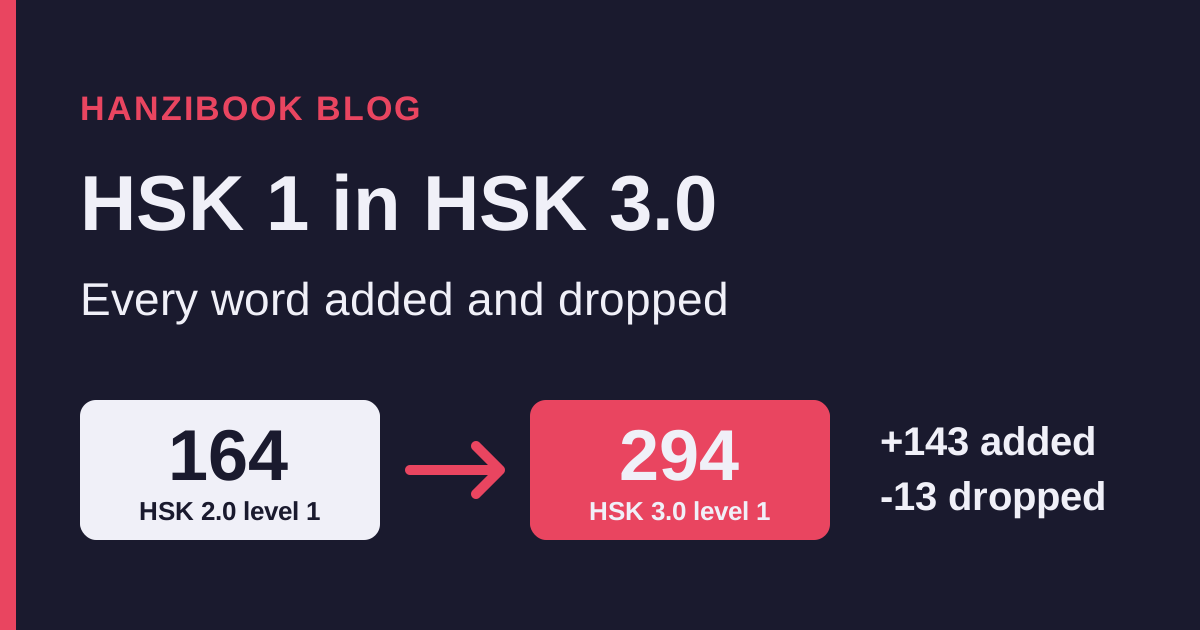
In HanziBook's data, HSK 3.0 level 1 has 294 words and HSK 2.0 level 1 has 164. Of those, 151 words stay, 143 are new at level 1 and 13 leave it. The new ones are mostly everyday words: 53 moved down from HSK 2.0 level 2, 4 from level 3, and 86 appear in no HSK 2.0 list.
The counts
We compared the two level 1 lists by word. A word counts as kept when the same characters are in both lists. The lists are the ones HanziBook uses for its guides and copybooks, checked on 5 November 2026. The headline figures are 150 words for HSK 2.0 level 1 and about 300 for HSK 3.0 level 1. Our lists count a few entries differently, so the totals below are close to those numbers but not identical.
| Measure | Words |
|---|---|
| HSK 2.0 level 1 (HanziBook list) | 164 |
| HSK 3.0 level 1 | 294 |
| In both lists (kept) | 151 |
| Added at HSK 3.0 level 1 | 143 |
| Dropped from level 1 | 13 |
The 143 added words come from three places, and the 13 dropped words mostly reappear at a higher HSK 3.0 level.
Added: 53 words that moved down from HSK 2.0 level 2
These were level 2 words in HSK 2.0 and are now part of the first level. If you finished HSK 2.0 level 1 only, this is the first group to learn.
- 吧 ba - (particle: suggestion, assumption or mild command) - can be studied in HanziBook Study →
- 便宜 piányí - cheap / inexpensive - can be studied in HanziBook Study →
- 穿 chuān - wear / put on - can be studied in HanziBook Study →
- 大家 dàjiā - everyone / everybody - can be studied in HanziBook Study →
- 到 dào - arrive / reach - can be studied in HanziBook Study →
- 弟弟 dìdi - younger brother - can be studied in HanziBook Study →
- 第 dì - (ordinal prefix: 1st, 2nd...) - can be studied in HanziBook Study →
- 对 duì - correct / towards - can be studied in HanziBook Study →
- 房间 fángjiān - room - can be studied in HanziBook Study →
- 非常 fēicháng - very / extremely - can be studied in HanziBook Study →
- 哥哥 gēge - older brother - can be studied in HanziBook Study →
- 给 gěi - give / for - can be studied in HanziBook Study →
- 公司 gōngsī - company / firm - can be studied in HanziBook Study →
- 贵 guì - expensive - can be studied in HanziBook Study →
- 还 hái - still / also / yet - can be studied in HanziBook Study →
- 孩子 háizi - child / children - can be studied in HanziBook Study →
- 件 jiàn - (measure for clothes / items) - can be studied in HanziBook Study →
- 姐姐 jiějie - older sister - can be studied in HanziBook Study →
- 觉得 juéde - feel / think - can be studied in HanziBook Study →
- 可以 kěyǐ - can / may / OK - can be studied in HanziBook Study →
- 课 kè - class / lesson - can be studied in HanziBook Study →
- 两 liǎng - two / both - can be studied in HanziBook Study →
- 卖 mài - sell / betray - can be studied in HanziBook Study →
- 忙 máng - busy - can be studied in HanziBook Study →
- 妹妹 mèimei - younger sister - can be studied in HanziBook Study →
- 男 nán - male / man - can be studied in HanziBook Study →
- 您 nín - you (polite) - can be studied in HanziBook Study →
- 牛奶 niúnǎi - milk - can be studied in HanziBook Study →
- 起床 qǐ chuáng - get up / wake up - can be studied in HanziBook Study →
- 千 qiān - thousand - can be studied in HanziBook Study →
- 去年 qùnián - last year - can be studied in HanziBook Study →
- 上班 shàngbān - go to work - can be studied in HanziBook Study →
- 生病 shēngbìng - get sick / fall ill - can be studied in HanziBook Study →
- 时间 shíjiān - time / period - can be studied in HanziBook Study →
- 手机 shǒujī - mobile phone / smartphone - can be studied in HanziBook Study →
- 它 tā - it (things, animals) - can be studied in HanziBook Study →
- 外 wài - outside / foreign / external - can be studied in HanziBook Study →
- 玩 wán - to play / have fun - can be studied in HanziBook Study →
- 晚上 wǎnshang - evening / night - can be studied in HanziBook Study →
- 问 wèn - ask / inquire - can be studied in HanziBook Study →
- 问题 wèntí - question / problem - can be studied in HanziBook Study →
- 小时 xiǎoshí - hour - can be studied in HanziBook Study →
- 新 xīn - new - can be studied in HanziBook Study →
- 休息 xiūxi - rest / take a break - can be studied in HanziBook Study →
- 雪 xuě - snow - can be studied in HanziBook Study →
- 要 yào - want / need / will - can be studied in HanziBook Study →
- 元 yuán - yuan / Chinese dollar - can be studied in HanziBook Study →
- 再 zài - again / once more - can be studied in HanziBook Study →
- 早上 zǎoshang - morning / early morning - can be studied in HanziBook Study →
- 找 zhǎo - look for / find - can be studied in HanziBook Study →
- 真 zhēn - real / really / true - can be studied in HanziBook Study →
- 正在 zhèngzài - in the process of / currently - can be studied in HanziBook Study →
- 知道 zhīdào - know / be aware of - can be studied in HanziBook Study →
Added: 4 words that moved down from HSK 2.0 level 3
- 半 bàn - half - can be studied in HanziBook Study →
- 超市 chāoshì - supermarket - can be studied in HanziBook Study →
- 今年 jīnnián - this year - can be studied in HanziBook Study →
- 中文 zhōngwén - Chinese language / written Chinese - can be studied in HanziBook Study →
Added: 86 words that are in no HSK 2.0 list
These do not appear in any HSK 2.0 list in HanziBook's data. They include plural pronouns, meal words, school and work words and many two-character compounds.
- 白天 bái tiān - daytime; during the day - can be studied in HanziBook Study →
- 包子 bāozi - steamed bun (filled) - can be studied in HanziBook Study →
- 边 biān - side; edge - can be studied in HanziBook Study →
- 病 bìng - illness; disease - can be studied in HanziBook Study →
- 不要 bù yào - don't; must not; to not want - can be studied in HanziBook Study →
- 唱 chàng - to sing; to call loudly - can be studied in HanziBook Study →
- 车 chē - vehicle / car / cart - can be studied in HanziBook Study →
- 大学 dà xué - university; college - can be studied in HanziBook Study →
- 大学生 dà xué shēng - university student; college student - can be studied in HanziBook Study →
- 电话 diàn huà - telephone; phone call - can be studied in HanziBook Study →
- 电影院 diàn yǐng yuàn - cinema; movie theater - can be studied in HanziBook Study →
- 店 diàn - shop; store - can be studied in HanziBook Study →
- 读书 dú shū - to read a book; to study - can be studied in HanziBook Study →
- 饭 fàn - meal / cooked rice / food - can be studied in HanziBook Study →
- 饭店 fàn diàn - restaurant; hotel - can be studied in HanziBook Study →
- 分 fēn - fen (1 cent) / minute / point - can be studied in HanziBook Study →
- 歌 gē - song; to sing - can be studied in HanziBook Study →
- 国 guó - country; nation; state; (bound form) national - can be studied in HanziBook Study →
- 汉字 hàn zì - Chinese character - can be studied in HanziBook Study →
- 好看 hǎo kàn - good-looking; nice to look at; (of a film, book) good - can be studied in HanziBook Study →
- 好听 hǎo tīng - pleasant to hear - can be studied in HanziBook Study →
- 好玩儿 hǎo wán r - fun; amusing - can be studied in HanziBook Study →
- 后 hòu - back / behind / after - can be studied in HanziBook Study →
- 家人 jiā rén - family member; family - can be studied in HanziBook Study →
- 见 jiàn - see / meet / appear - can be studied in HanziBook Study →
- 饺子 jiǎozi - dumpling - can be studied in HanziBook Study →
- 开车 kāi chē - to drive a car - can be studied in HanziBook Study →
- 看病 kànbìng - see a doctor / go to hospital - can be studied in HanziBook Study →
- 口 kǒu - mouth / opening / entrance - can be studied in HanziBook Study →
- 没有 méi yǒu - not have; there is not; did not - can be studied in HanziBook Study →
- 们 men - plural marker for pronouns, and nouns referring to individuals - can be studied in HanziBook Study →
- 面包 miàn bāo - bread - can be studied in HanziBook Study →
- 面条儿 miàn tiáo r - noodles - can be studied in HanziBook Study →
- 明年 míng nián - next year - can be studied in HanziBook Study →
- 哪里 nǎ lǐ - where? - can be studied in HanziBook Study →
- 哪些 nǎ xiē - which ones? - can be studied in HanziBook Study →
- 那边 nà bian - over there; yonder - can be studied in HanziBook Study →
- 那儿 nà r - there - can be studied in HanziBook Study →
- 那里 nà li - there; that place - can be studied in HanziBook Study →
- 那些 nà xiē - those - can be studied in HanziBook Study →
- 男朋友 nán péng you - boyfriend - can be studied in HanziBook Study →
- 你们 nǐ men - you (plural) - can be studied in HanziBook Study →
- 女 nǚ - woman / female / girl - can be studied in HanziBook Study →
- 女朋友 nǚ péng you - girlfriend - can be studied in HanziBook Study →
- 女士 nǚ shì - lady; madam - can be studied in HanziBook Study →
- 前 qián - front / before / forward - can be studied in HanziBook Study →
- 请问 qǐngwèn - excuse me / may I ask - can be studied in HanziBook Study →
- 上课 shàngkè - attend class / go to class - can be studied in HanziBook Study →
- 上学 shàng xué - to go to school; to attend school - can be studied in HanziBook Study →
- 事 shì - matter; thing - can be studied in HanziBook Study →
- 书店 shū diàn - bookstore - can be studied in HanziBook Study →
- 睡 shuì - to sleep; to lie down - can be studied in HanziBook Study →
- 说 shuō - say / speak / talk - can be studied in HanziBook Study →
- 他们 tā men - they - can be studied in HanziBook Study →
- 它们 tā men - they (things, animals) - can be studied in HanziBook Study →
- 她们 tā men - they; them (for females) - can be studied in HanziBook Study →
- 天 tiān - sky / heaven / day / weather - can be studied in HanziBook Study →
- 听见 tīng jiàn - to hear - can be studied in HanziBook Study →
- 外边 wài bian - outside - can be studied in HanziBook Study →
- 晚 wǎn - late / evening / night - can be studied in HanziBook Study →
- 晚饭 wǎn fàn - evening meal; dinner - can be studied in HanziBook Study →
- 午饭 wǔ fàn - lunch - can be studied in HanziBook Study →
- 下班 xià bān - to finish work; to get off work - can be studied in HanziBook Study →
- 下课 xiàkè - class is over / leave class - can be studied in HanziBook Study →
- 小朋友 xiǎo péng yǒu - child - can be studied in HanziBook Study →
- 小学 xiǎo xué - elementary school; primary school - can be studied in HanziBook Study →
- 小学生 xiǎo xué shēng - primary school student; schoolchild - can be studied in HanziBook Study →
- 星期日 xīng qī rì - Sunday - can be studied in HanziBook Study →
- 星期天 xīng qī tiān - Sunday - can be studied in HanziBook Study →
- 学 xué - to learn; to study - can be studied in HanziBook Study →
- 一半 yī bàn - half - can be studied in HanziBook Study →
- 一点儿 yī diǎn r - a bit; a little - can be studied in HanziBook Study →
- 一些 yī xiē - some; a few - can be studied in HanziBook Study →
- 有的 yǒu de - some (of them) - can be studied in HanziBook Study →
- 有点儿 yǒu diǎn r - slightly; a little - can be studied in HanziBook Study →
- 有些 yǒu xiē - some; somewhat - can be studied in HanziBook Study →
- 早 zǎo - early / morning / good morning - can be studied in HanziBook Study →
- 早饭 zǎo fàn - breakfast - can be studied in HanziBook Study →
- 这边 zhè biān - this side; here - can be studied in HanziBook Study →
- 这儿 zhè r - here - can be studied in HanziBook Study →
- 这里 zhè lǐ - here - can be studied in HanziBook Study →
- 这些 zhè xiē - these - can be studied in HanziBook Study →
- 只 zhǐ - only; merely (also zhī, a measure word for animals) - can be studied in HanziBook Study →
- 中学 zhōng xué - secondary school (middle and high school) - can be studied in HanziBook Study →
- 中学生 zhōng xué shēng - secondary school student - can be studied in HanziBook Study →
- 做饭 zuò fàn - to prepare a meal; to cook - can be studied in HanziBook Study →
Dropped: 13 words that leave level 1
These 13 words are in HanziBook's HSK 2.0 level 1 list but not in HSK 3.0 level 1. Dropped from level 1 does not mean dropped from the exam: 10 of the 13 come back at HSK 3.0 level 2, 3 or 5, and the notes below say where.
Three words have no entry of their own in any HSK 3.0 list in our data. The negative 没 (méi) is covered at level 1 by the longer 没有 (méi yǒu), which is in the added list above.
- 小姐 xiǎojiě - Miss / young lady - can be studied in HanziBook Study →
Now in HSK 3.0 level 5 - 女人 nǚrén - woman - can be studied in HanziBook Study →
Now in HSK 3.0 level 3 - 没 méi - not have / no - can be studied in HanziBook Study →
No entry of its own in any HSK 3.0 list - 银行 yínháng - bank - can be studied in HanziBook Study →
Now in HSK 3.0 level 3 - 饭馆 fànguǎn - restaurant - can be studied in HanziBook Study →
Now in HSK 3.0 level 2 - 火车站 huǒchēzhàn - train station - can be studied in HanziBook Study →
No entry of its own in any HSK 3.0 list - 北京 Běijīng - Beijing - can be studied in HanziBook Study →
No entry of its own in any HSK 3.0 list - 语言 yǔyán - language - can be studied in HanziBook Study →
Now in HSK 3.0 level 3 - 前面 qiánmiàn - front / ahead - can be studied in HanziBook Study →
Now in HSK 3.0 level 2 - 后面 hòumiàn - behind / back - can be studied in HanziBook Study →
Now in HSK 3.0 level 2 - 万 wàn - ten thousand - can be studied in HanziBook Study →
Now in HSK 3.0 level 2 - 西瓜 xīguā - watermelon - can be studied in HanziBook Study →
Now in HSK 3.0 level 3 - 饿 è - hungry - can be studied in HanziBook Study →
Now in HSK 3.0 level 3
What it means for learners
If you learned the HSK 2.0 level 1 list, you already know 151 of the 294 words in HSK 3.0 level 1. That leaves 143 to learn, 130 more words than the old level 1 had in total.
Start with the 53 words from HSK 2.0 level 2. They are common words such as 给 (gěi, to give) and 可以 (kěyǐ, can), so they pay off fastest.
Do not delete the 13 dropped words from your flashcards. Most of them return at a higher HSK 3.0 level, and words like 北京 (Běijīng, Beijing) are useful whatever the exam list says.
HSK 3.0 becomes the live exam on 13 December 2026. Read HSK 3.0: what changed for the timeline, see the full HSK 3.0 level 1 word list, and practise writing every word with the free HSK 3.0 level 1 copybook.
Frequently asked questions
How many words does HSK 3.0 level 1 have?
294 words in HanziBook's HSK 3.0 level 1 list, compared with 164 in its HSK 2.0 level 1 list. That is 143 words added and 13 dropped, with 151 in both.
Do I have to relearn HSK 1 for HSK 3.0?
No. 151 of the 294 words are the same, so you only need to add the 143 new ones. Start with the 53 words that moved down from HSK 2.0 level 2.
Where did the dropped HSK 1 words go?
10 of the 13 appear at a higher HSK 3.0 level: 4 at level 2, 5 at level 3 and 1 at level 5. The other three, 没 (méi), 火车站 (huǒchēzhàn) and 北京 (Běijīng), have no entry of their own in any HSK 3.0 list in our data.
Comments
Join the discussion after the page loads.